Land Clearing
Forestry Mulching vs. Land Clearing: Choosing the Right Finish for Your Ohio Property
By Buckeye Land & Property Management · Lima, Ohio
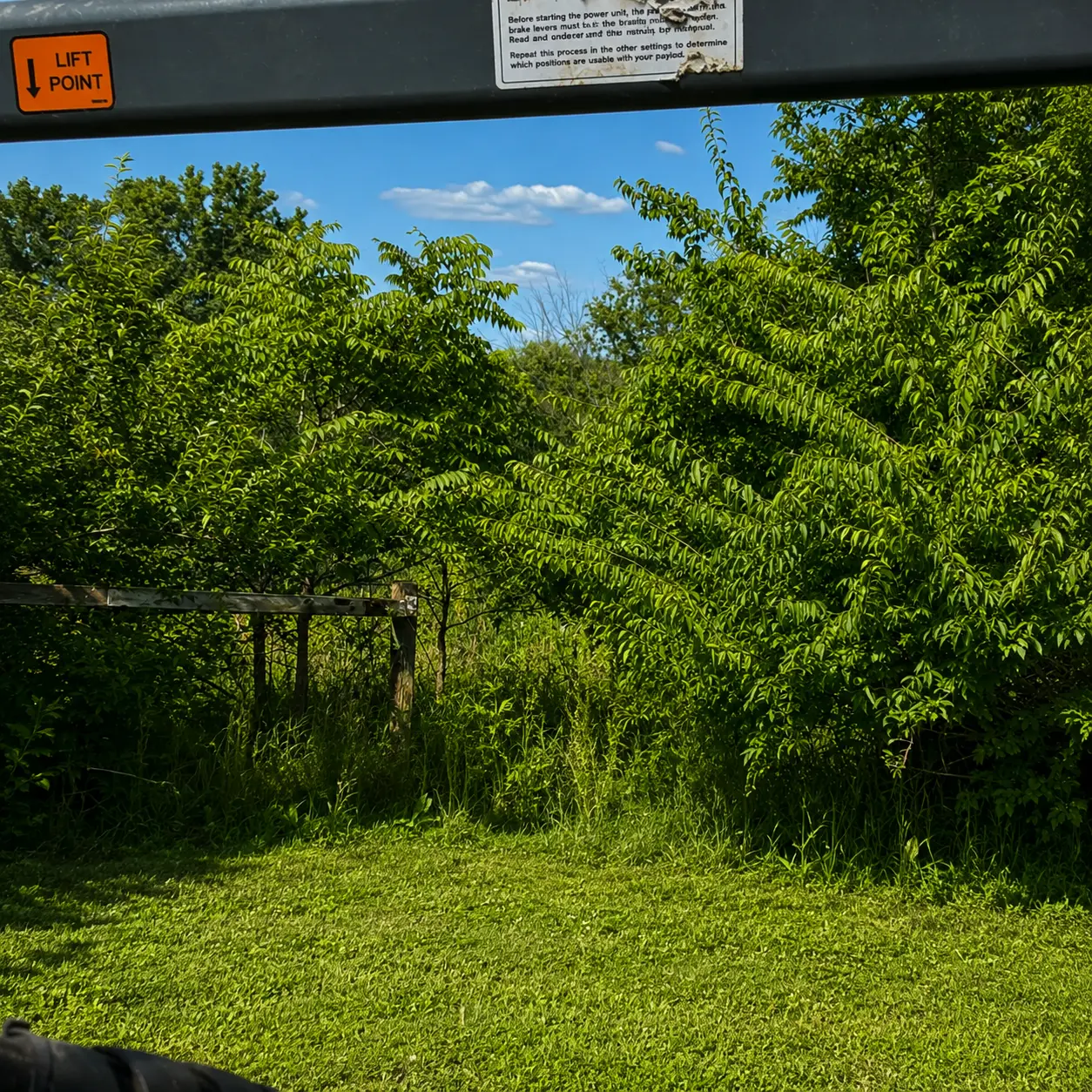
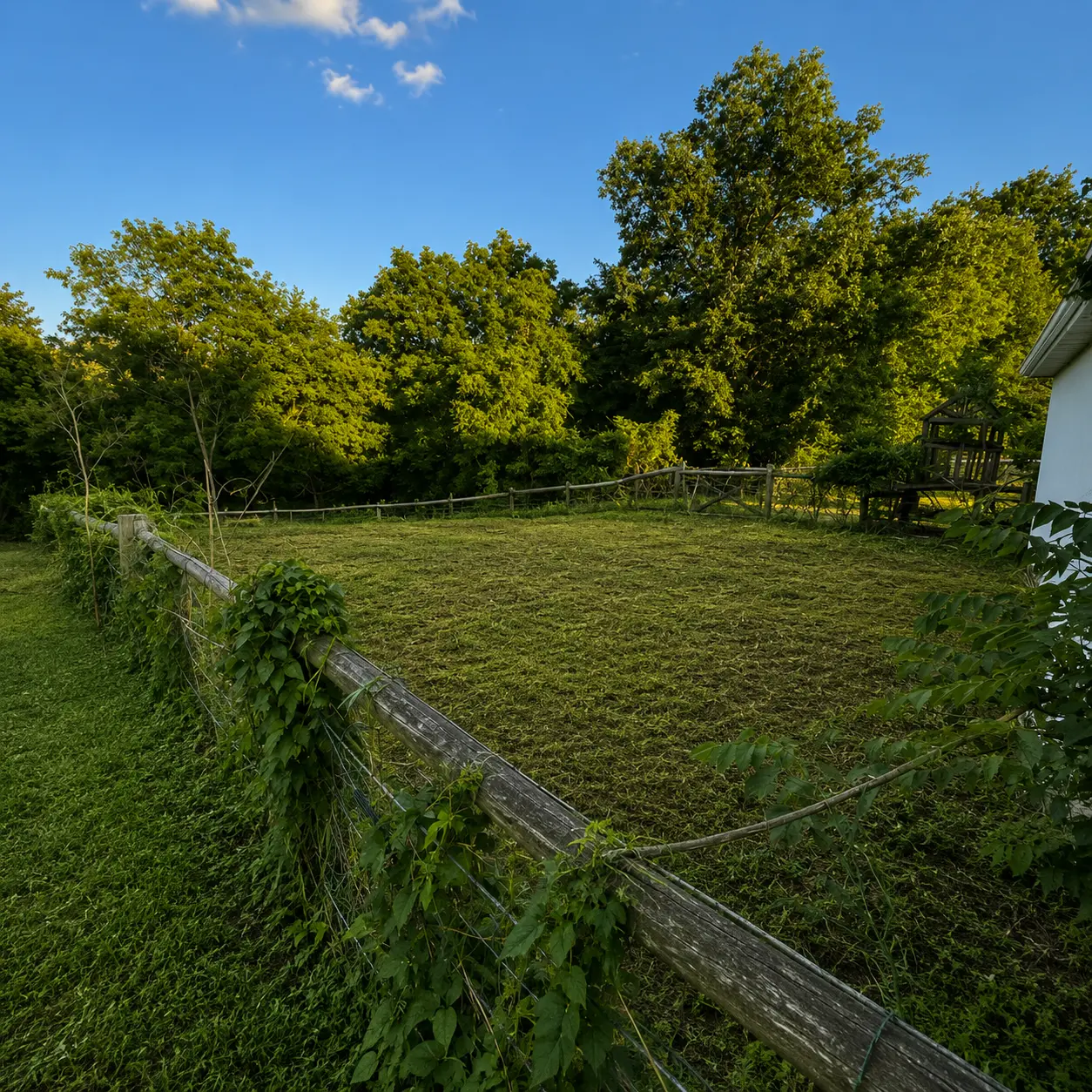
A fence hidden by brush, a trail you can no longer walk, and a future building site may all need clearing—but they do not need the same finish. Before choosing forestry mulching or a broader clearing job near Lima, decide whether you want manageable vegetation, open access, or ground ready for another contractor’s next step.
Forestry mulching handles vegetation, not every underground obstacle
A forestry mulcher processes brush and suitable woody vegetation into material left on the ground. That makes it useful for opening brush-heavy areas without treating every branch as a separate hauling job. Equipment choice depends on the vegetation, access, terrain, and trees that must stay.
Mulching is not the same as removing a stump and its root system. A surface that looks open can still contain roots, buried debris, and obstacles. If your next step is a foundation, trench, driveway, or finished lawn, make those requirements part of the clearing discussion rather than assuming mulching completes the site preparation.
Broader clearing starts with a clearly defined scope
Land clearing can include vegetation removal, stump work, debris handling, and grading, but the name alone does not tell you which of those tasks is included. Ask how large trees will be handled, what happens to the cut material, and whether the quote includes stump removal or only cutting at the surface.
For a future building area, coordinate the clearing limits and required finish with the person responsible for the site plan. Clearing a lot does not establish that it is ready to build on or that drainage, soil, access, and local requirements have been addressed.
Protect the parts of the property you want to keep
Walk the work area with the contractor before equipment arrives. Identify trees to preserve, fence corners, gates, and any narrow passages. Old wire and posts can disappear into vegetation; point out what you know about them even if you cannot currently see them.
Do not use the edge of the brush as a property boundary. Resolve uncertain boundaries before authorizing clearing near a neighbor. Identify underground utilities and discuss private lines, septic systems, and drain tile before work that disturbs the ground.
- Mark the work limits and the trees or features that stay.
- Specify whether stumps need removal.
- Agree on mulch, debris piles, and hauling before work begins.
- Describe the next use: mowing, trail access, fencing, or another project.
- Ask what follow-up vegetation control and maintenance may be needed.
Plan for regrowth, not just the first day’s result
Clearing makes an area accessible, but it does not guarantee that unwanted vegetation will never return. Some plants regrow from roots or seed. Identify persistent problem vegetation and decide how the area will be maintained once equipment leaves.
If the goal is to mow, ask what surface conditions and remaining woody material to expect before bringing a mower into the area. If the goal is a fence corridor, agree on enough usable space to inspect and maintain the fence—not merely expose it for a photograph.
Request a clearing plan for your property
Send Buckeye Land & Property Management your property location, wide photos of the overgrowth, and the finish you want. We offer land clearing, forestry mulching, brush cutting, stump removal, and grading. A free estimate is the place to confirm which work belongs in your project and which tasks need separate planning.